The 19th Battalion, Canadian Expeditionary Force (CEF), was one of 111
infantry battalions raised in the province of Ontario during the First
World War.1 Ottawa issued the order authorizing the
battalion’s mobilization on 19 Oct. 1914 and placed the unit under
the command of Lieutenant-Colonel (Lt-Col) John Inglis McLaren, a
businessman, politician, and militia officer from Hamilton who commanded
the city’s 91st Regiment (Canadian Highlanders). The battalion
mobilized at Toronto and recruited part of its original complement of
personnel there, with the rest of the men hailing from Hamilton,
Brantford, Sault Ste Marie, and St Catharine’s. A number of militia
units from these communities recruited companies of men to form the
battalion, including the Queen’s Own Rifles, 48th Highlanders, 10th Regiment (Royal Grenadiers), 38th Regiment, 51st Regiment (Soo
Rifles), 19th (Lincoln) Regiment, 13th Royal Regiment, and the
91st Regiment. Like Lt-Col McLaren, a number of the unit’s senior
officers and close to 30 per cent of its other ranks came from
Hamilton2, thus laying much of the foundation for the
19th Battalion’s strong association with that city and with the Argyll
and Sutherland Highlanders of Canada (Princess Louise’s), the Hamilton
regiment that perpetuates its legacy.
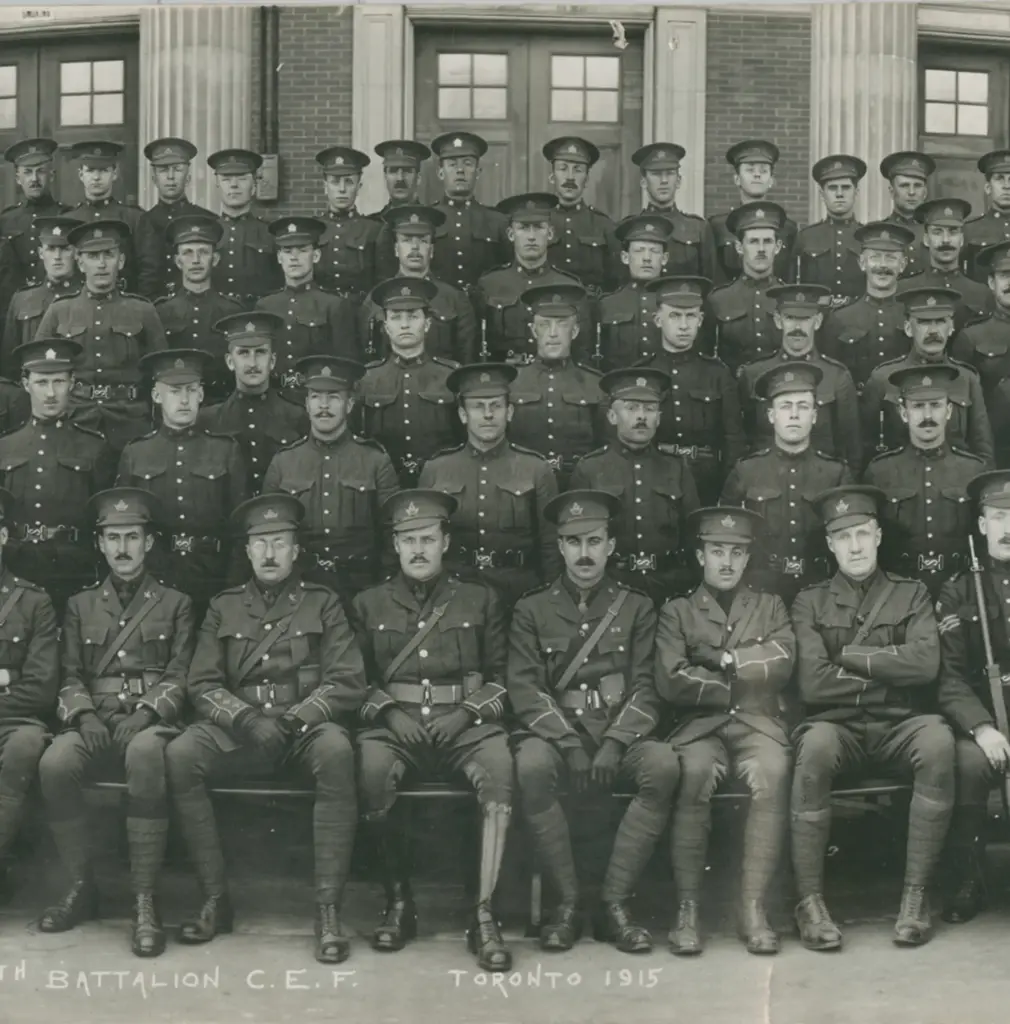
At Toronto’s Exhibition Camp, the battalion assembled and conducted basic
training from November 1914 to May 1915. Over half of the unit’s
original strength of 1,105 men of non-commissioned ranks did not have any prior
military service, while those who did varied considerably in the extent
of their service before the war.3
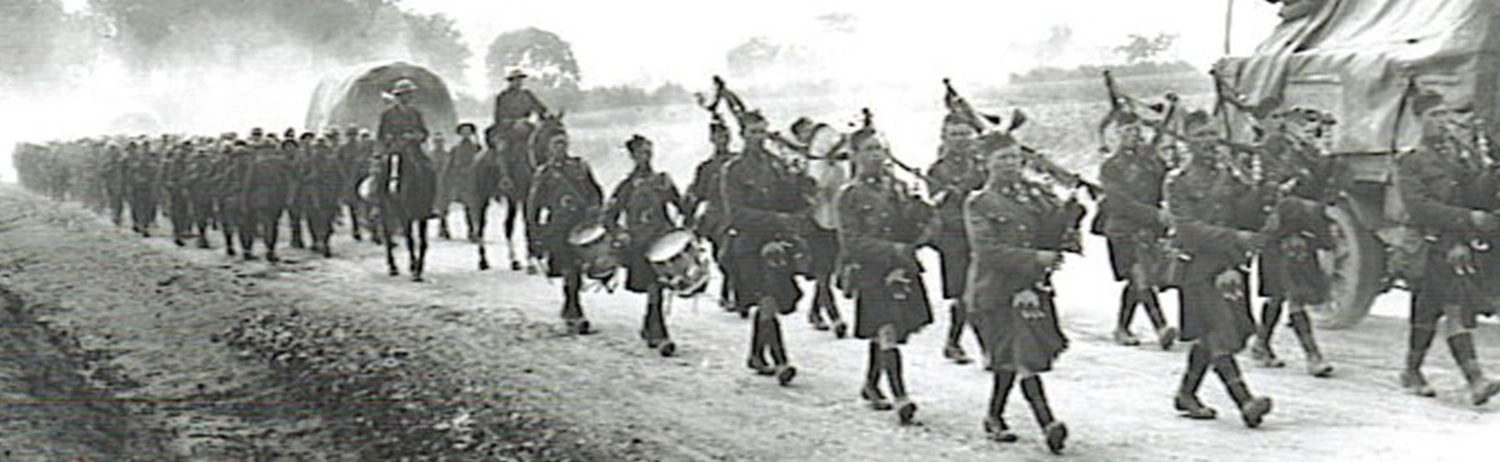
The 19th Battalion departed Toronto by train and embarked from
Montreal on 13 May 1915 aboard RMS Scandinavian. The battalion was
part of Canada’s Second Contingent of units for overseas service. With
recent news of the torpedoing and sinking of the RMS Lusitania fresh
in everyone’s minds, all ranks were relieved to reach Plymouth Sound
safely, where they disembarked on 23 May.
The battalion spent the rest of the spring and summer training at West
Sandling in the region of Shorncliffe, near the English Channel. They
also carried out manoeuvres with the other units with which they would serve
on the Western Front. The 19th Battalion would form part of the 4th
Infantry Brigade, along with the 18th, 20th, and 21st Battalions –
all from Ontario. The 4th, 5th, and 6th Infantry Brigades, plus
artillery, engineering, communications, transportation, supply, and
medical units, would be organized to form the 2nd Division of the CEF.
The 19th Battalion marched to Folkestone on 14 September, where they
embarked for France. Landing at Boulogne in the early morning of 15
September, the men made their way inland by train and foot toward the
battlefield. With the arrival of 2nd Division on the continent, a new
Canadian Corps was formed, composed of the 1st and 2nd Divisions. Later
in 1916, they would be joined by the 3rd and 4th Divisions.
The men of the 19th Battalion entered the trenches for the first time
just east of Wulverghem in Belgium on 20-21 September. The next day
casualties began trickling in, mainly owing to inexperience and
carelessness. In October, they moved into the lines at Vierstraat. There,
in even muddier and more dangerous conditions, the battalion spent the
next four and a half months, alternating tours of duty in the front
lines with welcome periods in reserve positions.
The 19th Battalion saw action in the 2nd Division’s first major
operation at the St Eloi craters in April 1916. The result was a
disaster. The Canadians had relieved an exhausted British division in a
series of mine craters and then suffered a devastating German counter-attack before they could properly consolidate their positions. The
19th Battalion entered the crater sector on 7–8 April as part of 4th
Brigade’s relief of the battered 6th Brigade. Heavy fighting ensued
from 9 to 11 April as the 19th participated in counter-attacks to
dislodge the Germans from the craters. Throughout the fighting, Canadian
efforts were hampered by inaccurate intelligence, which misidentified a
number of the craters and resulted in poorly coordinated attacks that
failed to achieve their objectives. Officers and men floundered from one
massive shell hole and crater to another, and frequently lost their way
in the bewildering quagmire.
The 19th Battalion’s ordeal in the crater sector finally came to an
end on 12 April as it and other 4th Brigade units were relieved by
5th Brigade. Although they had failed to eject the Germans from the
craters, Lt-Col McLaren and his men had acquitted themselves bravely in
conditions that some veterans rated as among the worst that Canadians faced
during the entire war. In the month of April, the 2nd Division suffered
1,953 casualties, 125 of which (including 29 fatalities) were members of
19th Battalion. This was a hard blow for McLaren and his men.
Unfortunately, these numbers would be dwarfed by losses in future
engagements.
The next major Canadian battle occurred during June 1916 around Mount
Sorrel, in the southeastern portion of the Ypres Salient. From 5 to 11
June the 19th Battalion held the lines near the Ypres-Comines railway,
and although they were not involved in the worst of the fighting that
month, their time in the trenches was difficult and deadly owing to the
German artillery. The 19th Battalion (and the rest of the Canadian
Corps) did not participate in the infamous British offensive on 1
July 1916 at the Somme, and so were spared the slaughter that occurred
on that day for so many battalions. The Canadians’ role in the Battle of
the Somme would come later that year, when they would be thrown into
some of the heaviest fighting. Meanwhile, on 18 July a change of command
occurred as Lt-Col McLaren departed the 19th Battalion for Canada to
command a training brigade. Succeeding him as battalion commander was
W.R. Turnbull, who had served as McLaren’s second-in-command in the
91st Regiment before the war.
On 29 July, near the end of a marathon 16-day tour in the lines,
four officers and 34 other ranks from 19th Battalion executed
an audacious daylight trench raid. This was the first such raid
by the Canadians and possibly the first along the entire British front,
for raiding up to that point had been carried out exclusively at
night.4 Making skilled use of the terrain in No
Man’s Land, which afforded excellent cover in their sector, the raiders
penetrated the German trenches just south of the Ypres-Comines Canal at
8:55 a.m. When it was over, they had killed or wounded an estimated
40 to 50 Germans, gathered intelligence on the enemy positions and
garrison, and destroyed two machine-gun posts. In the process, the
raiders incurred “slight casualties” numbering between five and eight
(according to various reports).5 Coordination with
covering artillery had been excellent, and the efforts of the gunners
were vital to the raid’s success. By daring to raid at an unconventional
time, the 19th Battalion contributed to the German view that Canadian
troops were dangerously unpredictable.6
On 24 August, the 19th Battalion began moving south to the battlefields
of the Somme along with their comrades in the rest of the Canadian
Corps. The battalion entered the lines on 10 September and prepared
jumping-off positions for other units that would be in the leading wave
of the 2nd Division’s attack at Courcelette, scheduled for 15 September.
During the attack itself, the 19th Battalion would provide platoons to
follow closely behind the assault troops, mop up any remaining German
resistance, and consolidate captured positions. However, the Germans
nearly disrupted the entire plan with an attack of their own just hours
before the Canadian advance began. It took the determined efforts of
troops from the 18th, 19th, and 20th Battalions to repulse the
enemy assault parties.
At 6:20 a.m. on 15 September, the artillery unleashed a deadly creeping
barrage ahead of the attacking infantry. Four minutes later, the leading
waves of the 4th Brigade went over the top, followed by platoons of the
19th Battalion. Between 7:04 and 8:40 a.m., the platoon commanders
reported that they had reached their assigned objectives and were
digging in to secure the morning’s gains. All day they worked under
intense German shell fire, and around 5:00 p.m. troops of the 5th
Brigade passed through their positions to continue the attack and
capture what remained of the village of Courcelette.
In the early phases of this difficult day’s work, the men also observed
the impact of some of the first tanks to go into action in the history
of warfare. Although only two of the six tanks assigned to support the
Canadians managed to advance far enough to engage and terrify the enemy,
the 19th Battalion reported that the strange machines had played an
important part in the attack’s success. However, the cost to the
battalion for their part in this victory was high, with six officers and
approximately 250 other ranks killed, wounded, or missing on 15
September. It was their first major offensive operation and one that
survivors would not soon forget.
But the 19th Battalion was not finished with the Somme yet. They were
ordered into action again on 28 September northeast of Courcelette,
where they managed to advance about a thousand yards before being
forced by increasingly heavy machine-gun and artillery fire to dig in.
After further patrol work, the exhausted battalion was pulled back into
support positions on the night of 30 September/1 October; three nights
later, they finally moved back into reserve.
In less than a month, from 10 September to 3 October, the battalion had
suffered an estimated loss of 19 officers and 412 other ranks
(killed, wounded, and missing).7
The 19th Battalion and the rest of 2nd Division departed the Somme
battlefront and marched to the Calonne sector, northwest of the infamous
Vimy Ridge, where they entered the lines on 17 October. This sector was
part of the Arras-Lens front, where the Canadian Corps would concentrate
after its formations left the Somme in October and November. There, they
would spend the rest of the autumn and winter reinforcing their depleted
ranks, holding the line, patrolling, raiding, and training for their
next task – the capture of Vimy Ridge itself.
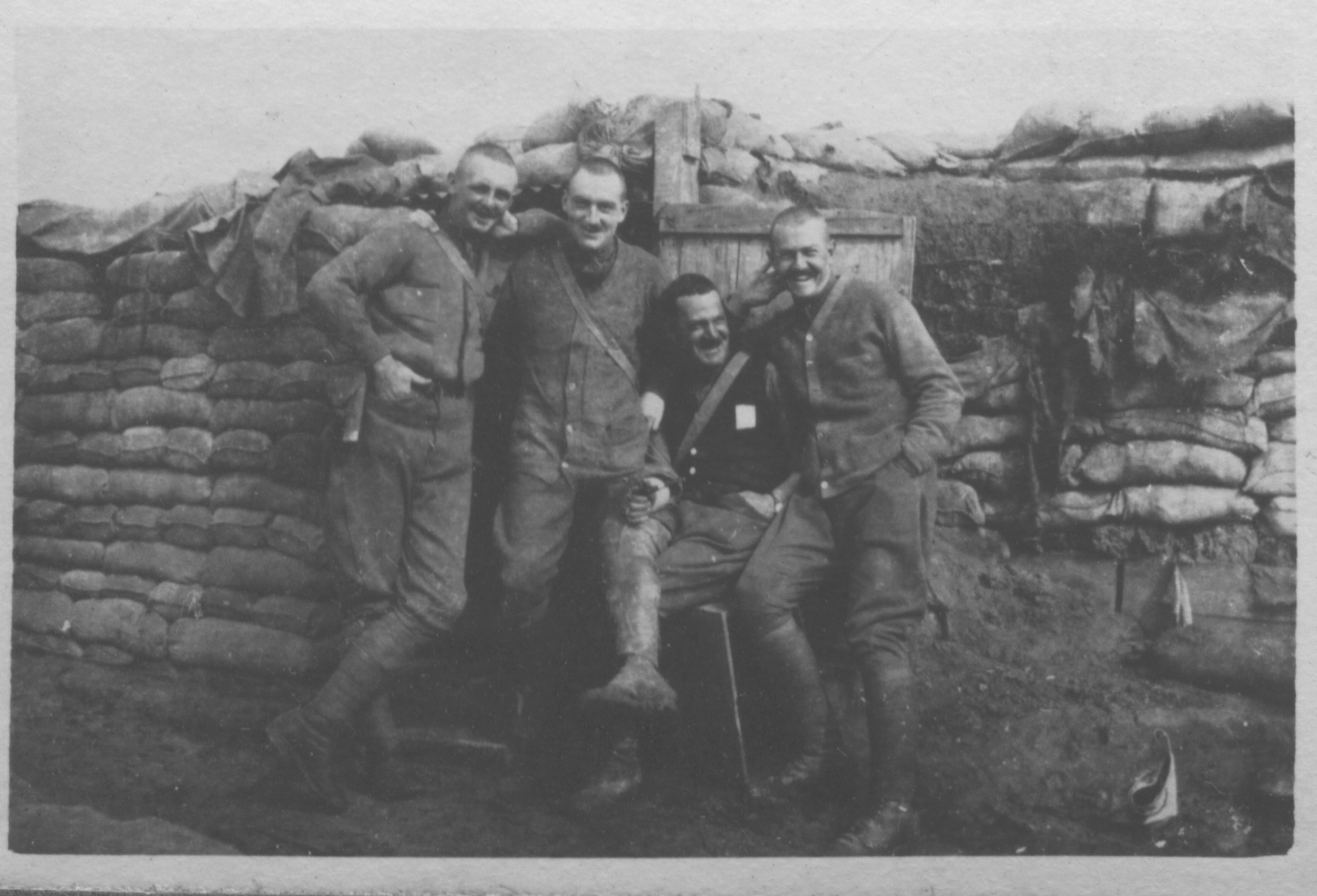
Major Lionel H. Millen took over command of the 19th Battalion from
Lt-Col Turnbull, who departed on 17 Dec. 1916, possibly owing to
exhaustion and ill health exacerbated by a foot wound received earlier
that summer. Millen, who had moved to Canada from Britain at age
17, was a businessman and militia officer in Hamilton’s 91st
Regiment before the war. He was an outstanding leader and would retain
command of the battalion for the rest of the war.
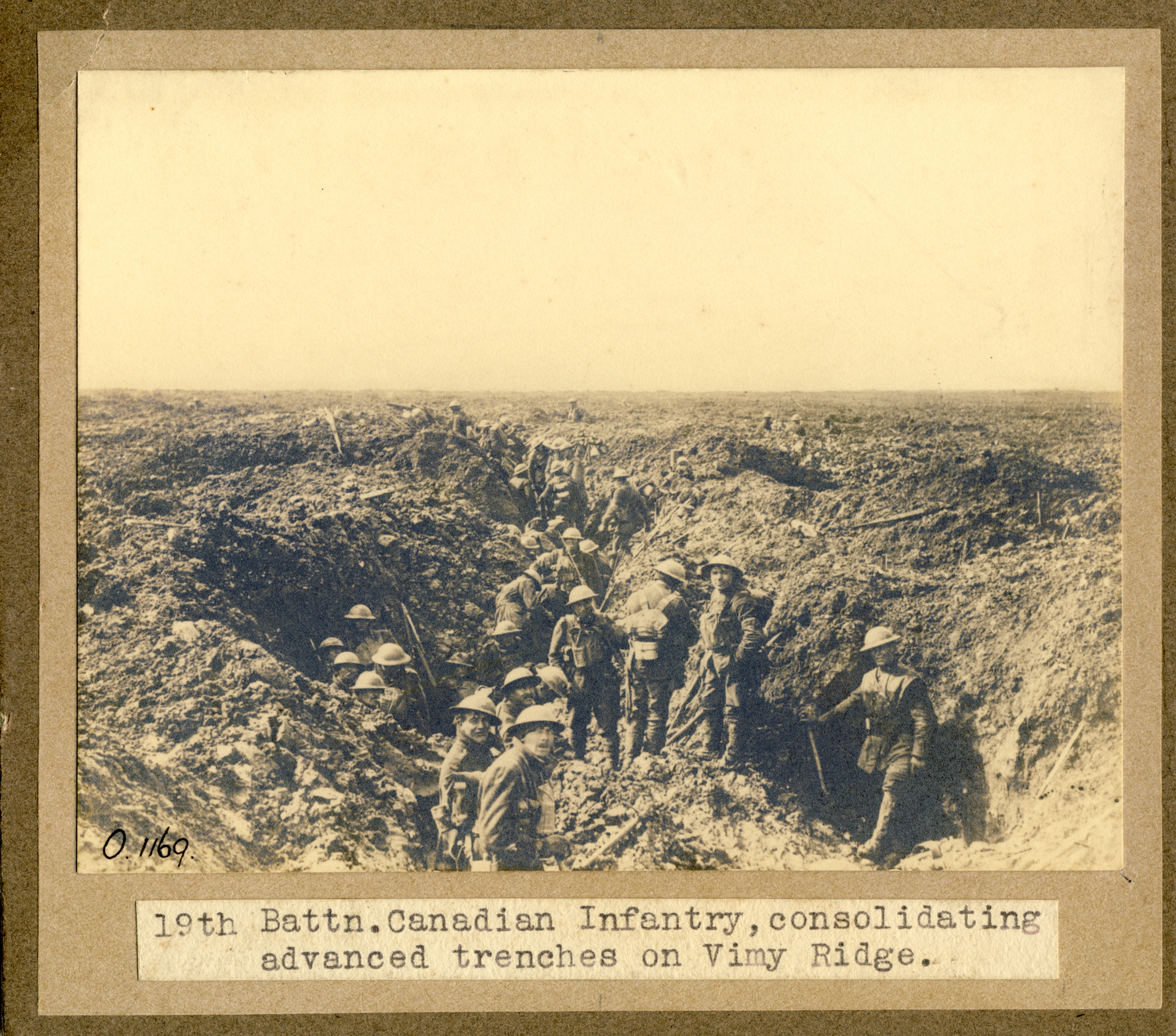
From January through March 1917, the 19th Battalion carried out periods of
training interspersed with tours of duty in the trenches of the Calonne
and Thélus sectors. Between 27 March and 7 April, the battalion conducted
more intensive training exercises: practising platoon, company, and
battalion-level attacks, and participating in brigade offensive schemes.
This was in preparation for the impending assault of Vimy Ridge,
scheduled for 9 April. Major Harry Hatch oversaw much of the 19th
Battalion’s pre-battle training as Lt-Col Millen was in hospital because of a flare-up of bronchitis. Hatch was another Hamilton businessman with
pre-war experience as a junior officer in the 91st Regiment. Millen
would return on 6 April, just in time to oversee his battalion’s final
preparations for battle.
Leading off the 2nd Division’s part of the Canadian Corps’ attack on 9
April would be the 4th and 5th Brigades. Both would advance through
the German-occupied area east of Neuville St Vaast, where they were to
seize the first of several objective lines that were colour-coded on
their maps. The 19th Battalion would be in the first wave, advancing
alongside 18th Battalion. After moving through the German front and
support trenches, the men of the 19th Battalion would advance to their final
objective, code-named the Black Line, which in their section of the
battlefield ran along the German trench known as the Zwischen
Stellung. Both the 19th and 18th Battalions would halt and dig in along
the Black Line while their comrades in the 21st Battalion
“leapfrogged” ahead to continue the attack to the Red line, the limit of
the 4th and 5th Brigades’ advance. It would be left to the
division’s reserve forces, from the 6th Brigade and the British 13th
Brigade, to take the Blue and Brown lines, the final objectives for the
day.
At precisely 5:30 a.m. on 9 April 1917, the artillery opened up with a
stupendous roar as the infantry rose from their trenches, filed out of
assembly tunnels, and trudged behind the creeping barrage across the
sleet-swept No Man’s Land toward the German front
line.8 At 6:07 a.m., Lt-Col Millen received word that
his men had captured their assigned portion of the Black line. While the
leading brigades mopped up scattered German hold-outs and cleared debris
from the shattered trenches, the follow-up brigades continued the attack
as scheduled, securing the division’s final objectives along the Brown
Line by 1:55 p.m.9
Lt-Col Millen had a great deal to be proud of in the conduct of his men
on 9 April. In addition to the territory they seized, the 19th
Battalion captured five machine guns, five German “Fish Tail Bomb
Carriers,” two light trench mortars, and at least 120
prisoners.10 It was an outstanding morning’s work
by all ranks. But the capture of the ridge and subsequent gains in
follow-up actions over the next several days were achieved at
considerable cost in lives. From 9 to 14 April, three officers of 19th
Battalion were killed or died of wounds, and six others were injured. As
for the other ranks, the grim toll was 32 killed, 154 wounded,
and 27 missing.11
The toll was even heavier in an exceedingly nasty action the following
month, when the 19th Battalion relieved the 28th and 29th Battalions
in the front lines near Fresnoy. The relief was almost complete in the
pre-dawn hours of 8 May when the Germans launched a ferocious artillery
and infantry assault. Their chief target was the village of Fresnoy,
held by British troops along the 19th Battalion’s right flank. When
the British were driven back, the Canadians were in serious danger of
being outflanked. This forced them to withdraw part of their forces on
the right. Counter-attacks to restore the situation met with initial
success, and soon the 19th Battalion was in possession of its original
front-line positions. Unfortunately, the neighbouring British units did
not have sufficient reserves to restore the situation on their own
front, and early that afternoon the 19th was forced to withdraw part
of its force once again in order to link up with the British.
The butcher’s bill for this brief but horrific front-line tour was
11 officers and 225 other ranks, many of whom were “killed outright
with shrapnel” during several savage
bombardments.12 Included among these losses was the
first significant number of prisoners taken from the battalion. Post-war
records indicate that two officers and 17 men of other ranks were
captured by the Germans on 8–9 May. The fact that no comparably large
number of men were captured from the 19th Battalion at any other time
in the war testifies to the chaos, ferocity, and close-quarters nature
of the fighting near Fresnoy.13
What remained of the battered battalion was relieved on 9 May. They
spent the following weeks, until 3 July, in reserve, support, and quieter
front-line duties relieved by periods of reorganization and training. In
the meantime, the Canadians would finally see one of their own, Arthur
Currie (born in Strathroy, Ontario), promoted to command the Canadian
Corps. Currie’s first major operation as commander would be
launched in August against Hill 70, a height of land just north of the
German-occupied city of Lens.
The 19th Battalion was assigned a support role in the storming of Hill
70 on 15 August 1917. C Company, serving as “moppers up” for the 20th
Battalion, reached its objective and captured 72 prisoners and a machine
gun. On 16 and 17 August, elements of the 19th Battalion helped repulse
determined German counter-attacks, suffering their first exposure to
mustard gas on the night of 17 August.
After departing the vicinity of Lens on 23 August, the 19th Battalion
moved into billets for rest and training and then to various positions
in and around Vimy Ridge. Later in October, they entrained for Belgium,
where the Canadian Corps had been ordered to take part in the Second Army’s
offensive efforts to seize the Passchendaele Ridge.
On 25 October, the 19th Battalion marched to Potijze in Belgium, where
they prepared for their part in the massive offensive that had chewed up
so many divisions from all over the British Empire. Their first task was
to supply working parties for the 4th Division, which along with the 3rd
Division was assigned to carry out the first two stages of a four-stage
advance designed by Lt-Gen Currie to reach the Corps’ final objective
line beyond the village of Passchendaele. On 2 November, the 19th Battalion
moved into the morass of the front lines, and the next day the Germans
attempted an attack of their own. None of the enemy soldiers managed to reach the
19th Battalion’s positions, but Millen’s men did manage to assist a
neighbouring Australian battalion in retaking a portion of its own
line after it had been seized by the Germans.
On 8 November, two days after other units of 2nd Division had captured the
smashed remnants of Passchendaele village, the 19th Battalion moved up
from reserve into the front lines. On 10 November, in the fourth and
final phase of the Canadian advance, the battalion helped to
anchor positions on the division’s right while units to their left took
what remained of the Canadian objectives just beyond Passchendaele.
Fortunately, this was their last tour in these lines. On 12 November, the
19th Battalion moved out of the Ypres Salient and back to France,
reaching camp at Villers au Bois, west of Vimy, on 17 November.
Compared with periods of heavy fighting, the 19th Battalion
experienced a relatively quiet winter rotating in and out of the lines
from mid-December 1917 to mid-March 1918 in sectors along the Vimy-Lens
front. This routine was abruptly broken by two disturbing events, one
internal to the battalion and the other external. Internally, Private
Harold Lodge was convicted by court martial on one count of desertion
and two counts of attempted desertion. He was sentenced to death and
shot by a firing squad on 13 March.14 Externally, a
grave crisis erupted for the Allied armies on the Western Front.
On 21 March, the Germans launched a massive offensive designed to win the
war before American military power could make a decisive impact on the
battlefields. By the third day of the onslaught, the Germans had torn a
gap in the Allied line approximately 50 miles wide and some 40 miles deep, primarily in sectors occupied by formations of Britain’s
Fifth Army. Divisions of General Byng’s Third Army, next to the battered
Fifth, also came under heavy attack. In order to stem the German tide,
reinforcements were needed. The 2nd Division was therefore temporarily
detached from the Canadian Corps, and on 28 March it was attached to VI
Corps in Byng’s Third Army. There it would remain for most of the next
three months, holding the line against German raids and executing an
aggressive series of patrols and raids of its own against German units
in the Neuville Vitasse sector.
By the end of June, the situation was finally stable enough for the 2nd
Division to return to the Canadian Corps, and July would be a month of
rest from holding the line. But as August dawned, training efforts were
stepped up and a series of clandestine moves to the south brought the 19th
Battalion and the rest of the Canadian Corps to the Fourth Army’s front
to take part in the upcoming Battle of Amiens, scheduled to begin on 8
August.
At Amiens, the attack was spearheaded by the Australian and Canadian
Corps, and for the first time since the battle for Vimy Ridge the 19th
Battalion found itself in the vanguard. Holding the far left position of
the Canadian battlefront, with the Australians attacking on their left
flank, the men of the 19th advanced at 4:20 a.m. behind a massive
creeping artillery barrage. They were also supported by tanks of the
14th Tank Battalion. Their objective was code-named the Green Line,
situated 500 yards east of the village of Marcelcave and some
two-and-a-half to three miles from their jumping-off positions.
After clearing out stubborn pockets of German resistance in cooperation
with the Australians and other units of their own 4th Brigade, the men of the
19th Battalion reached the Green Line at 6:55 a.m. Along the way, they
captured one field gun, 29 machine guns, two Minenwerfers,
and about 250 prisoners – the latter including a commanding officer and
his staff, complete with medical officers and a chaplain. This was part
of a broader pattern of success that day, which saw follow-up forces
continue the advance into the evening hours. By then, the Canadians and
Australians had punched their way into German-held territory to a
distance of seven to eight miles. For General Erich Ludendorff of the
German High Command, 8 Aug. 1918 was “the black day of the German Army
in the history of this war.” But for the victors, the price in casualties
was as grim as the territorial gains were impressive. In the 19th
Battalion alone, four officers were killed, seven officers were wounded,
and 147 other ranks were killed, wounded, or
missing.15 Almost three-quarters of the officers
and more than one-quarter of the other ranks in the battalion’s four rifle
companies became casualties that day.16
After an additional hard-fought action at Fransart on 16 August, the
exhausted 19th Battalion moved into reserve positions at Arras on 24
August. There, the Canadians would be thrust into yet another phase of
the Allied offensive. The 19th Battalion was still in reserve for the
opening day of the Battle of Arras on 26 August. But the battalion would
rotate into the vanguard of 4th Brigade on the following day. It was
an exceedingly difficult attack, as so many follow-up operations were.
There were problems with coordination of all arms, and the artillery
barrage was not as effective as on the previous day. Some guns fired
short and caused casualties among their own infantry. The 19th moved
into support for the third day of the attack on 28 August, but little
headway was made against stiffening enemy resistance. Fresh units and
time to reorganize were needed before further progress could be made.
At Arras, the men of the 19th Battalion participated in the 2nd
Division’s advance over five miles through some of the most difficult
and heavily defended territory on the Western Front. In so doing, Lt-Col
Millen’s men captured nine German officers and 257 other ranks,
contributing a good portion of the 4th Brigade’s estimated bag of 900
prisoners. In addition to numerous machine guns, the 19th Battalion also
captured an anti-tank gun, which was turned over to brigade headquarters
for further study.17 The Battle of Arras was considered by Lt-Gen Currie to be “the hardest battle” in the Canadian
Corps’ history,18 and it contributed more to the
19th Battalion’s alarming body count, which skyrocketed to 28
officers and 486 other ranks that month. This made August 1918 the
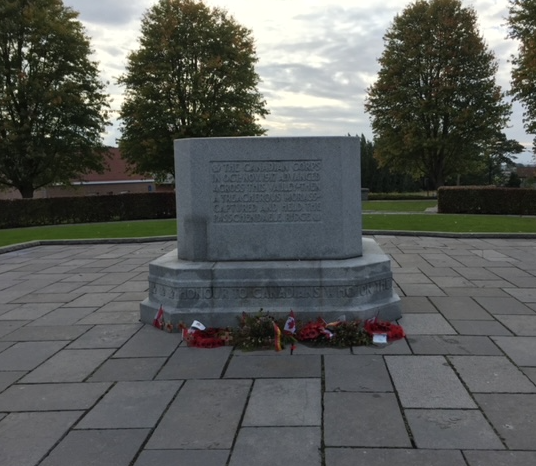
battalion’s costliest month of the entire war.19
After a month of such mauling, the 19th Battalion was not back in the
forefront of the action again until the second week of October, by which
time other elements of the Canadian Corps had pushed through the
formidable Drocourt-Quéant Line, crossed the Canal du Nord, and captured
the key city of Cambrai – a vital transportation and communications hub
for the German armies. As the fighting moved beyond Cambrai, the Germans
fell back in an orderly retreat, pursued doggedly by the Canadians.
On the morning of 10 October, the 19th Battalion attacked and captured the
village of Naves, northeast of Cambrai. This was followed by further
advances that day until A and B Companies had reached their objectives
along the main road running from Naves to Villers en Cauchies. By
evening, the unit had advanced some 6,000 yards from its starting point
that morning.20
The 19th Battalion was also instrumental in helping to repulse an
unexpected German counter-attack on 11 October. In combination with
troops from other Canadian and British units, they faced German tanks
for the first and only time in the war. During the fight, one of the
officers, Lieutenant V. Crombie of C Company, found a discarded German
anti-tank rifle and opened fire on the leading enemy tank (an A7V),
damaging one of its treads and putting it out of action. German infantry
accompanying the tanks collapsed amid a hail of Lewis gun and rifle fire,
and the remaining German machines circled around and headed back in the
direction from which they had come. The tide irrevocably turned in the
Canadians’ favour when a battery of field artillery galloped onto the
scene and, in concert with the Vickers guns of the 2nd Canadian Motor
Machine Gun Brigade, poured a heavy close-range fire into the retreating
Germans.21 Casualties in the fighting northeast of
Cambrai had cost the 19th Battalion a total of four officers wounded,
one officer missing, and 139 other ranks killed or wounded. This
amounted to almost all of the casualties suffered by the unit during the
month of October.22
Later, on 19 October, the 19th Battalion reached the bridgehead over
the Canal de l’Escaut just north of Neuville, where they found hundreds
of civilians cheering enthusiastically. This was the first inhabited
town that they had liberated from the enemy. Now that they were freeing
masses of people who had been suffering under German occupation, some of
the soldiers began to think that their own sacrifices and hardships had
a purpose after all.
Lt-Col Millen took command of the 4th Brigade on 20 October,
temporarily replacing Brigadier-General Eric McCuaig who had gone on
leave. As he had done already on more than one occasion, Major Hatch
assumed command of the 19th Battalion in Millen’s absence. The war on the Western Front soon proved to be in its final weeks. Allied
armies, bolstered by a huge American Expeditionary Force, relentlessly
followed the Germans in their steady, but still orderly, retreat toward
the German frontier.
The 19th Battalion and the rest of the 2nd Division had not played a leading
part in the Canadian advance since 19 October. That changed on the night
of 6–7 November when the 2nd Division relieved the 4th and took
up the advance alongside the 3rd. Both divisions were in Belgium
now, proceeding to the city of Mons, where British troops had fought
their first battle against the Germans in 1914.
Now the 19th Battalion was fated to take part in the final Canadian
action of the war. In support of the 3rd Division’s entry of Mons, the 19th
Battalion was among the lead-off units for the 2nd Division. They were
ordered to advance on Mons from the south and sweep around its
southeastern approaches, capturing the community of Hyon and the height
of Bois la Haut. Unfortunately, German troops in the area were given
strict orders to fight to the finish. At 10:45 a.m. on 10 November, the
19th Battalion approached the outskirts of Hyon but was held up by
heavy machine-gun fire, which inflicted a number of casualties. Major
Hatch decided to wait until dusk before making a further attempt at
getting forward. When a patrol eventually worked its way into Hyon, it
found that the Germans had already evacuated. The way was clear for the
Canadians to forge ahead, and both Hyon and Bois la Haut were secured by
the 19th and 20th Battalions in the pre-dawn hours of 11 November.
With the outpost line of the 4th Brigade secure along the road to the east
of Mons, the 19th Battalion made its formal entry into Hyon at 7 a.m. An
hour later, word reached them that the 6th Brigade would pass through its
positions to resume the advance. But even more momentously, it was also
announced that an armistice had been signed and that hostilities would
cease at 11:00 a.m. that day. For the men of the 19th Battalion, the
fighting was over, and they had paid the price of victory with blood.
During the war’s final full day, they sustained a total of 52 casualties,
including three officers and nine other ranks killed and one officer and
two other ranks who later died of their wounds.23
Although the fighting was suspended, the war technically was not over
until the signing of a formal peace treaty. In the meantime, the 19th
Battalion, along with the rest of the 1st and 2nd Divisions,
participated in the Allied occupation of a number of bridgeheads in
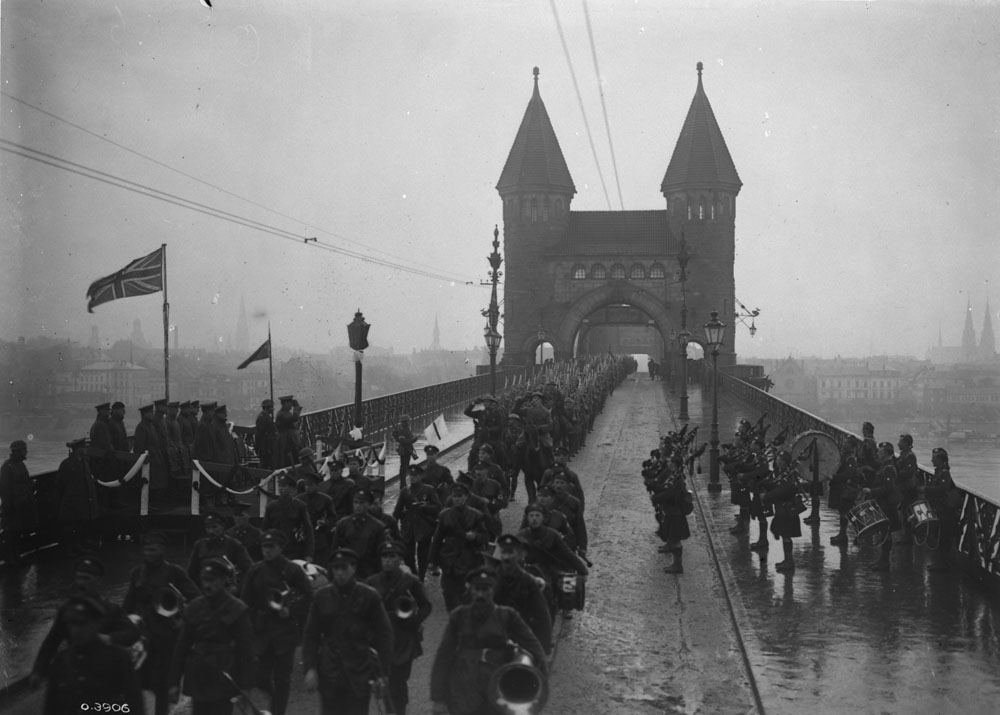
Germany along the eastern bank of the Rhine River. After Lt-Col Millen
returned from brigade headquarters and resumed his command, the 19th
Battalion crossed the Rhine at Bonn on 13 December and took up patrol
stations in the area of Siegburg and Neunkirchen. There it remained
until 20 January 1919.
The decision to withdraw the Canadians from occupation duties was a
welcome one, for the men were anxious to return home. But repatriating
Canada’s overseas forces would take time because of issues involving
shipping, rail transport capacity in Canada, and a host of economic and
administrative concerns.24 After a sojourn in Belgium, the 19th Battalion embarked from Le Havre on 5 April and
crossed the Channel to England, where it stayed at Witley Camp. Medical
and record office parades ensured that the affairs of all ranks were in
order before their eventual return to Canada. Leave was granted
liberally and five officers and 200 men of other ranks represented the
battalion in a great victory parade of troops from all over the Empire, which
was held in London on 3 May.
Finally, on 13 May, the 19th Battalion proceeded by train to Liverpool,
where the men boarded RMS Caronia along with the other units of the 4th
Brigade. Their destination: Halifax. By sheer coincidence, it was on 13
May four years earlier that they had shipped out of Montreal for
England. When they disembarked at Halifax on 22 May, the battalions were
loaded onto trains bound for Ontario: the 19th and 20th Battalions
to Toronto; the 18th Battalion to London; and the 21st Battalion to
Kingston. When the 19th Battalion reached Toronto on 24 May 1919, the
men formed up and marched along streets lined with cheering crowds to
Varsity Stadium for their final assembly and dispersal.
Prominent among the sea of familiar faces were former 19th Battalion
commanders John I. McLaren and W.R. Turnbull. It was especially
gratifying for these men to witness the return of their old unit after
it had performed so well on the grim battlefields of France and
Flanders. Accolades were received by Lt-Col Millen and Major Hatch, both
of whom had rendered sterling service in command of the battalion
through many of the toughest battles of the war.25
With demobilization, in May 1919 the 19th Battalion effectively ceased to exist as
an operational unit. However, its disbandment would not be
proclaimed officially until 15 Sept. 1920, four years to the day
after its members had gone over the top in their first major attack at
Courcelette, and exactly five years after they had landed in
France.26 In all, the battalion earned 18 Battle
Honours in operations stretching from spring 1916 to the end of the war.
Ten of these honours were selected for emblazonment on the Colours of
the regiment, perpetuating the 19th Battalion’s legacy, the Argyll and
Sutherland Highlanders of Canada (Princess
Louise’s).27
From mobilization in 1914 to demobilization in 1919, 118 officers and
between 4,731 and 5,004 other ranks passed through the 19th
Battalion.28 Of these men, 3,076 were casualties,
including 737 fatalities (all ranks).29 Commenting
on this remarkable turnover, battalion veteran R.H. (Harry) Neil later
declared, “[T]he battalion had changed over in personnel, almost four
and one half times…. But one thing had not changed – it was the same old
19th.”30
While Neil’s sentiment is understandable, in fact much had changed since
the 19th Battalion first assembled in Toronto in 1914. Experience and
training had transformed its personnel from amateur volunteers into
battle-hardened professionals. It is highly unlikely that the unit that
landed in France in 1915 would have performed as effectively during the
Hundred Days as did the battalion that had come through the crucible of
St Eloi, the Somme, Vimy, Hill 70, and Passchendaele. New
reinforcements were brought up to speed by rigorous training as well as
by cadres of veteran officers and other ranks who served long enough to
impart their skills, knowledge, and unit culture to newcomers. These
factors helped maintain the battalion’s efficiency and much of its
social dynamic, even when many of the faces of its personnel changed.
Dr David Campbell
Mount Saint Vincent University, Halifax
Originally from Bridgetown, Prince Edward Island, David Campbell studied history, classics, and fine arts at the University of Prince Edward Island (BA); Egyptology at the University of Toronto (MA); and military/diplomatic history at the University of Calgary (PhD). He has been teaching courses at the Mount Saint Vincent University, Halifax, since 2006.
David Campbell’s research interests lie mainly in the social and operational history of armed forces, with a special focus on Canada’s army during the First World War. Additional interests lie in the regional development of Canada’s Armed Forces and the influence of culture and memory in public commemoration of military experience. He has published works dealing with recruitment, tactical development, and social dynamics in the Canadian Expeditionary Force during the First World War.
Shortly after David had completed his doctoral dissertation on the 2nd Division, CEF, the Argyll Regimental Foundation (ARF) commissioned him to write a history of the 19th Battalion, CEF, which was in the 2nd Division. His book will be published by Wilfrid Laurier University Press in October 2017 and launched in Hamilton on 4 November 2017.
1 Please Note: Information in this summary account has
been taken primarily from the official war diary of the 19th Battalion,
which is cited below, and from additional sources. For
passages in the text of this summary that do not feature specific
citations, it may be assumed that the information was drawn from the
daily descriptions in the war diary. John F. Meek, Over the Top! The
Canadian Infantry in the First World War (Privately printed, 1971),
168–171; Paul Maroney, “‘The Great Adventure’: The Context and Ideology
of Recruiting in Ontario, 1194–17,” Canadian Historical Review,
77:1 (March 1996): 63, note 6.
2 According to the battalion’s war diary, of the 1,117
other ranks originally contributed by the militia units that assembled
drafts of men to serve in the 19th Battalion, 305 (or 27.3 per cent) came from
Hamilton’s 13th Royal Regiment and the 91st Regiment (Canadian
Highlanders). Library and Archives Canada (hereafter LAC), Record Group
(hereafter RG) 9, III-D-3, vol. 4926, War Diary, 19th Battalion, 6
Nov. 1914–31 Jan. 1915, Diary text, 6 Nov. 1914 (hereafter
War Diary, 19th Battalion, date); LAC, RG 9, III-D-1, vol. 4692,
folder 51, file 11, “19th Canadian Battalion, Digest of Service;” LAC,
RG 9, II-B-3, vol. 79, 19th Battalion, Nominal Roll of Officers,
Non-Commissioned Officers and Men, issued with Militia Orders, 1915
(hereafter 19th Battalion, Nominal Roll). According to a contemporary
article in the press, “33 per cent of the rank and file” of the 19th
Battalion hailed from Hamilton. “Toronto furnished 50 per cent of the
strength, and the balance came from Brantford, St. Catharines and Sault
Ste. Marie.” Archives of the Argyll and Sutherland Highlanders of Canada
(Princess Louise’s) (hereafter ASH), large bound volume of papers and
clippings belonging to W.R. Turnbull (hereafter Turnbull papers),
newspaper clipping, paper and date unknown, article on departure
overseas of the 19th Battalion. These numbers are hard to verify,
given the difficulty of establishing with certainty every man’s place of
residence at the time of enlisting. Upon attesting in 1914 and 1915,
each man was asked to state his place of birth and the identity and
address of his next of kin, but these would not have corresponded
necessarily with his place of residence at that time. Some attestation
forms, which appear to have come into use later in the war, did request
information on each man’s current address. For sample specimens of both
types of attestation forms, see the listing for Private Albert Gladstone
Ghent, Regimental Number 55080, in the on-line database “Soldiers of
the First World War,” LAC,
http://www.bac-lac.gc.ca/eng/discover/military-heritage/first-world-war/first-world-war-1914-1918-cef/Pages/item.aspx?IdNumber=419027
3 19th Battalion, Nominal Roll.
4 Major J.A. Cooper, History of Operations of
4th Canadian Infantry Brigade, 1915-1919 (London: Charles and Son,
n.d.), p. 13.
5 Colonel G.W.L. Nicholson, Canadian Expeditionary
Force, 1914-1919: The Official History of the Canadian Army in the First
World War (Ottawa: Queen’s Printer, 1962), p. 154; LAC, RG 9, III-C-3,
vol. 4116, folder 4, file 7, “Typical Trench Raids Carried Out by
Canadian Corps July 1st to August 20th 1916;” LAC, RG 9, III-D-1,
vol. 4692, folder 51, file 15, “Report on Raiding Operation Carried Out
by the 19th Canadian Battalion, 29th July, 1916,” by Major F. Logie
Armstrong for GOC, 4th Infantry Brigade, 30 July 1916; LAC, RG 9,
III-D-1, vol. 4692, folder 51, file 15, “Report on Raid by 19th
Battalion, 29th July 1916,” by Lieutenant-Colonel W.R. Turnbull, 30
July 1916. Neither Turnbull’s nor Armstrong’s reports provides a precise
number of casualties. Turnbull refers to “some casualties – mostly
slight.” Canadian Corps headquarters’ summary of operations for the
period 28 July to 3 August 1916 states that two officers and three other
ranks were wounded in the raid, while a 1919 article in the Hamilton
Spectator claimed that a total of eight casualties were sustained by
the raiding party. LAC, RG 9, III-D-3, vol. 4813, War Diary, Canadian
Corps Headquarters, August 1916, Appendix III/2, “Canadian Corps,
Summary of Operations, July 28th to August 3rd 1916;” “19th
Battalion Put on Famous Daylight Raid,” Hamilton Spectator, 23 May
1919. An unsigned and undated report on the raid, possibly drafted by
Lt-Col Turnbull, also states that the raiders suffered eight
casualties. Turnbull Papers, large volume, “Report of Raiding Operations
carried out by the 19th Canadian Battalion, July 29th 1916.”
6 LAC, RG 41, B-III-1, Records of the CBC,
Flanders Fields, vol. 10, 19th Battalion, Transcript of interview
with E. Youngman, tape 3, p. 2.
7 War Diary, 19th Battalion, 16–19 September, 3
October 1916; LAC, RG 150, vols. 491-494, “Casualties By Days – France
and Belgium,” 19th Battalion.
8 War Diary, 19th Battalion, 9 April 1917;
ibid., April 1917, Appendix 2, Field message from Major H.D. Fearman
to all units, 8 April 1917.
9 Ibid., 9 April, 1917; Nicholson, Canadian
Expeditionary Force, p. 254; LAC, RG 9, III-D-3, vol. 4881, War Diary,
4th Infantry Brigade, April 1917, Diary text, 9 April 1917; LAC, RG
9, III-D-3, vol. 4889, War Diary, 6th Infantry Brigade, April 1917,
Appendix 10a, “6th Canadian Infantry Brigade, Narrative of Offensive
Operations on 9th and 10th April 1917;” David Campbell, “A ‘Most
Spectacular Battle’: 2nd Canadian Division and the Battle of Vimy
Ridge,” in Vimy Ridge: A Canadian Reassessment, edited by Geoff Hayes,
Andrew Iarocci, Mike Bechthold (Waterloo, Ont.: Laurier Centre for
Military Strategic and Disarmament Studies, 2007), pp. 171–91.
10 “Fish tail” was the Canadian nickname for a
type of German mortar projectile. Nicholson, Canadian Expeditionary
Force, pp. 256–57; War Diary, 19th Battalion, 9 April 1917; War
Diary, 4th Infantry Brigade, 9 April 1917. From 9–14 April, the
Canadian Corps would advance 4,500 yards, capture more than 4,000
prisoners, and seize 54 guns, 104 trench mortars, and 124 machine guns.
Nicholson, Canadian Expeditionary Force, p. 265.
11 War Diary, 19th Battalion, 14 April 1917;
ibid., April 1917, Appendix 5, Field message, 13 April 1917.
12 War Diary, 19th Battalion, May 1917, Appendix
2, Report by Major H.D. Fearman, “19th Canadian Battalion, On the Left
of Fresnoy, May 8th, 9th, & 10th, 1917.”
13 LAC, RG 150, vol. 496, “Casualties By Days –
France and Belgium,” 19th Battalion, May 1917.
14 For a comprehensive examination of executions
in the Canadian Expeditionary Force, see A.B. Godefroy, For Freedom and
Honour? The Story of the 25 Canadian Volunteers Executed in the First
World War (Nepean: CEF Books, 1998); Teresa Iacobelli, Death or
Deliverance: Canadian Courts Martial in the Great War (Vancouver: UBC
Press, 2014).
15 War Diary, 19th Battalion, 8 August 1918.
16 This calculation is based on an estimation of
the strength of D Company, which is not provided in the 19th Battalion
war diary text on 8 August. Along the battalion front, C Company struck
out on the right, with four officers and 138 other ranks under the
command of Lieutenant A.P. Fletcher. A Company held the centre, with its
four officers and 129 other ranks led by Lieutenant W.S. Herbert.
Finally, four officers and 124 other ranks of B Company, commanded by
Captain G.H. Applegath, took up the advance along the left. Behind them,
waiting in reserve, was D Company under Lieutenant T.A. Allan. Based on
the strengths given for the other three companies, we may estimate that
D Company advanced with four officers and around 130 other ranks. War
Diary, 19th Battalion, 8 Aug. 1918.
17 War Diary, 19th Battalion, 26–28 August 1918;
ibid., August 1918, Appendix 6, “Operations by the 19th Canadian
Battalion, August 25th–29th, 1918.”
18 Lieutenant-General Sir A.W. Currie, “Interim
Report on the Operations of the Canadian Corps during the Year 1918,” in
Report of the Ministry, Overseas Military Forces of Canada, 1918
(London: Minister, Overseas Military Forces of Canada, n.d.), p. 144.
19 During its tour at Arras, the 19th Battalion
lost five officers killed, seven wounded, and one gassed. Among the
other ranks, there were 25 killed, 180 wounded, 26 gassed, 40 missing,
and one wounded and missing. War Diary, 19th Battalion, August 1918,
Appendix 6, “Operations by the 19th Canadian Battalion, August 25th–29th, 1918.” For the month as a whole, nine officers were killed, 18
wounded, and one gassed. As for the other ranks the breakdown was as
follows: 56 killed; 29 died of wounds; 346 wounded; 31 gassed; 24
missing. War Diary, 19th Battalion, August 1918, Diary text, casualty
statistics.
20 War Diary, 19th Battalion, October 1918,
Appendix 1, “Report on Recent Operations, Oct 7th to Oct 13th;”
ibid., field message from A and B Companies, timed 19:45, 10 Oct. 1918; War Diary, 4th Infantry Brigade, October 1918, Appendix 8,
“Report on Operations, Cambrai – Iwuy;” War Diary, 19th Battalion,
October 1918, Appendix 1, field message from A and B Companies, timed
19:45, 10 Oct. 1918; Michael R. McNorgan, “‘My God, look at them
houses moving!’ Combined Arms Action at Iwuy, 10–11 October 1918,” in
Donald E. Graves, ed., More Fighting for Canada: Five Battles,
1760–1944 (Toronto: Robin Brass, 2004), pp. 214–15.
21 War Diary, 19th Battalion, October 1918,
Appendix 1, “Report on Recent Operations, Oct 7th to Oct 13th;”
McNorgan, “Combined Arms Action at Iwuy,” p. 232; Bruce Cane, It Made
You Think of Home, The Haunting Journal of Deward Barnes, Canadian
Expeditionary Force: 1916–1919 (Toronto: Dundurn, 2004), p. 265; LAC,
Manuscript Group 30, E 6, Sir Henry Burstall Papers, vol. 3, file 21,
Major-General H.E. Burstall, “2nd Canadian Division, Narrative of
Operations from March 13th to Nov. 11th, 1918,” p. 54 (hereafter,
Burstall, “2nd Division Narrative”).
22 War Diary, 19th Battalion, October 1918,
Appendix 1, “Report on Recent Operations, Oct 7th to Oct 13th;” RG
150, Vol. 502, “Casualties By Days – France and Belgium,” 19th
Battalion, October 1918.
23 Numbers derived from Part II Orders located in
LAC, RG 150, vol. 71, file titled “19th Canadian Battalion (Part 4).”
The three officers killed in action on 10 November were Captain M.C.
Roberts, Lieutenant C.E.G. Robertson, and Lieutenant W.C. McFaul. In
addition, Lieutenant W.W. Copeland was wounded in action on the same
date but died of his injuries on 23 December. The other ranks killed in
action on 10 November were: 3231310 Private J.C. Buttimer; 3107824
Private W. Chowns; 507414 Private P.J. Cronin; 2537338 Private W. Curry;
124752 Private W. Hales; 3032285 Private H. Howard; 3032328 Private C.
Jennings; 3132565 Private G. Shewfelt; 124732 Corporal J.A. Simon. Two
more other ranks, 3032675 Private J.S. Malzard and 799377 Sergeant A.
Craig, died of wounds received in action on 10 November. See also the
daily casualty statistics in LAC, RG 150, vol. 503, “Casualties by Days
– France and Belgium,” 19th Battalion, November 1918.
24 See Desmond Morton, “‘Kicking and Complaining’:
Demobilization Riots in the Canadian Expeditionary Force, 1918–19,”
Canadian Historical Review LXI:3 (1980): 334–60.
25 Members of Hamilton’s 91st Regiment were
especially proud of the fact that formal command of the 19th Battalion
had remained with one of their own for virtually the entirety of the
unit’s existence. The only exception to this was a period in August and
September 1916 when Major G.F. Morrison of Toronto assumed temporary
command of the battalion while Lt-Col Turnbull recovered from his wound.
“Lights of Home for Heroes of 19th Battalion,” Hamilton Spectator,
Monday, 26 May 1919.
26 According to the Department of Militia and
Defence, the 19th Battalion was “officially disbanded, vide General
Order No. 149 of the 15th September, 1920.” LAC, RG 24, C-1, vol.
1518, file HQ 683-35-5, memo from Department of Militia and Defence, 14
Oct. 1920.
27 Based in Hamilton, Ontario, the Argyll and
Sutherland Highlanders of Canada trace their origins to Hamilton’s
91st Regiment (Canadian Highlanders), the Militia unit that
contributed numerous recruits to the 19th Battalion, as well as much
of its cadre of senior officers. The Argylls also perpetuate the 173rd
Battalion and the 3rd Canadian Machine Gun Battalion, both of the CEF.
Directorate of History and Heritage, Department of National Defence,
Kardex 145.2A3 (D1), “The Argyll and Sutherland Highlanders of Canada
(Princess Louise’s), R.C.I.C. Organization, Perpetuations and Battle
Honours.”
28 The figure of 4,731 other ranks was cited in
the following sources: LAC, RG 24, C-6-e, vol. 1821, file GAQ 5-16,
“Comparative Statement Showing the Number of Other Ranks Passed Through
the Fighting Battalions of the Canadian Corps,” dated April 1924; LAC,
RG 24, C-6-d, vol. 1884, file 58, “Notes on Units, Arms and Services of
the Canadian Expeditionary Force Which Served in France and Flanders”
(compiled by W. Davidson, Historical Section, Ottawa). The figures of
118 officers and 5,004 other ranks were derived from Canadian War Museum
Archive, 19740071-020 58C 2 3.16, 19th Canadian Infantry Battalion
Association, “First World War, 1914–1919: Composition of 19th
Battalion, C.E.F., Original and Reinforcements,” compiled by H. “Barney”
Clendining, “with the help of the Historical Section of Army
Headquarters, Ottawa, and the D.V.A. Toronto.” Clendining lists numbers
of original and reinforcement personnel and the different units that
contributed them. He claims a total figure of 5,143 all ranks for the
19th Battalion. However, when the numbers in his list are added up,
the total actually works out to be 5,122 all ranks. Without knowing the
exact methodology through which the figures in the preceding sources
were derived, it is difficult to determine which is the most accurate.
29 These numbers include prisoners of war,
those with self-inflicted wounds, and those with injuries and accidental wounds. LAC, RG 150,
vol. 504, “Casualties, France and Belgium – Recapitulation,” 19th
Battalion. The souvenir program for the 19th Battalion Association’s
Golden Jubilee dinner claims that 785 officers and men of the 19th
Battalion were killed in action or died of wounds.
30 ASH, RG 4, series 3, World War 1, Ted Lang
Donation, “A Brief History of the 19th Battalion C.E.F. 1914–18,” by
R.H. (Harry) Neil, Q.C., Hon. President.