ABOUT THE PIPES AND DRUMS
Kilts and bagpipes are the symbols of a tradition rooted in Canadian
military history – the Highland regiment.
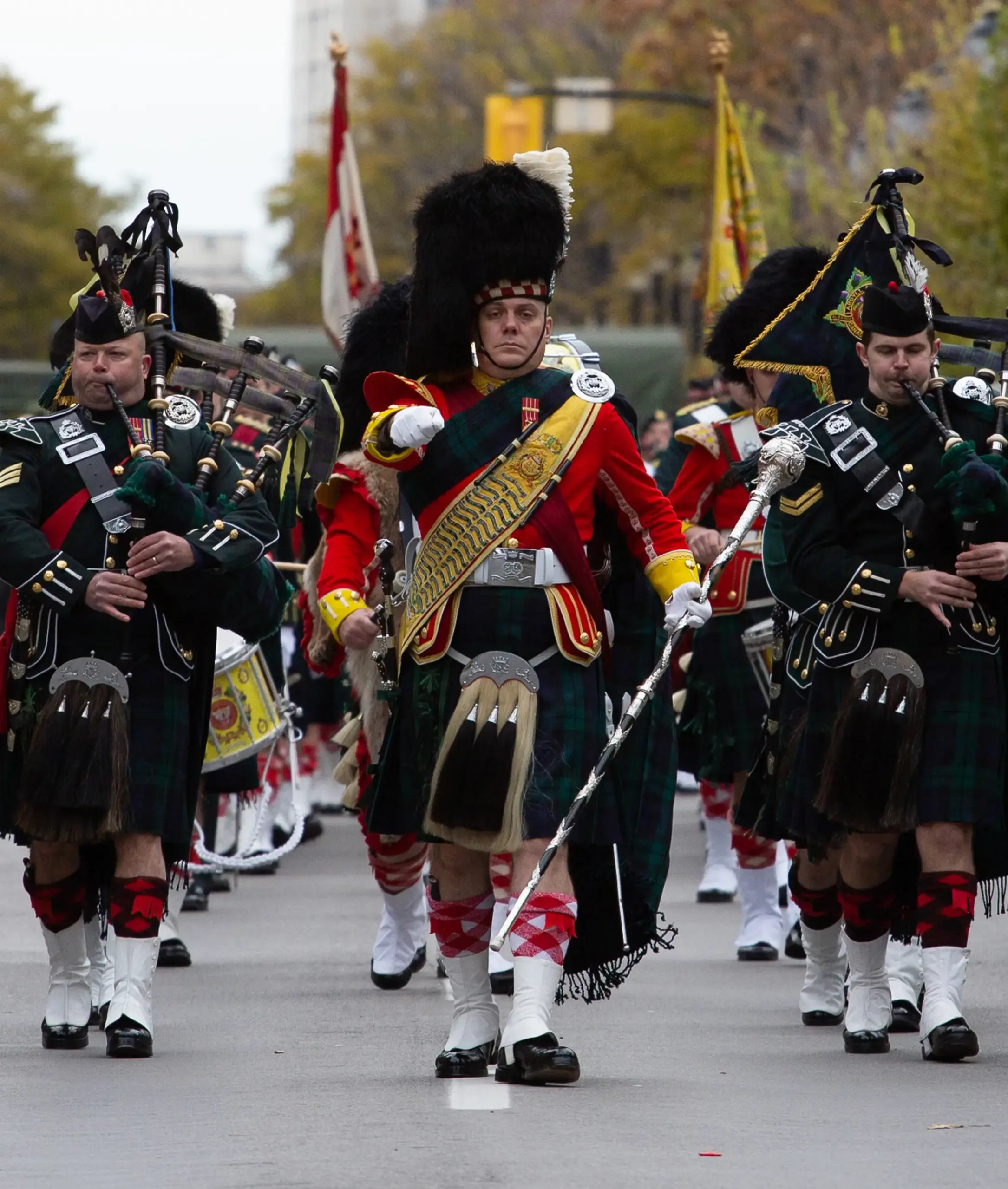
The piper symbolizes a Highland regiment. It is not just the distinctive
dress that sets the piper apart It is the music itself – powerful,
wild, sombre, capable of evoking every human emotion without a touch
of sentimentality. There are few cultures in which one instrument is so
deeply intertwined with a people. And the individual piper, so cherished
by Highland society, achieved even higher prominence and greater
symbolism with the emergence of Highland regiments and their pipe bands.
They attained a lofty prominence built upon personal character, superior
musicianship, bandsmanship, and soldierly attributes.
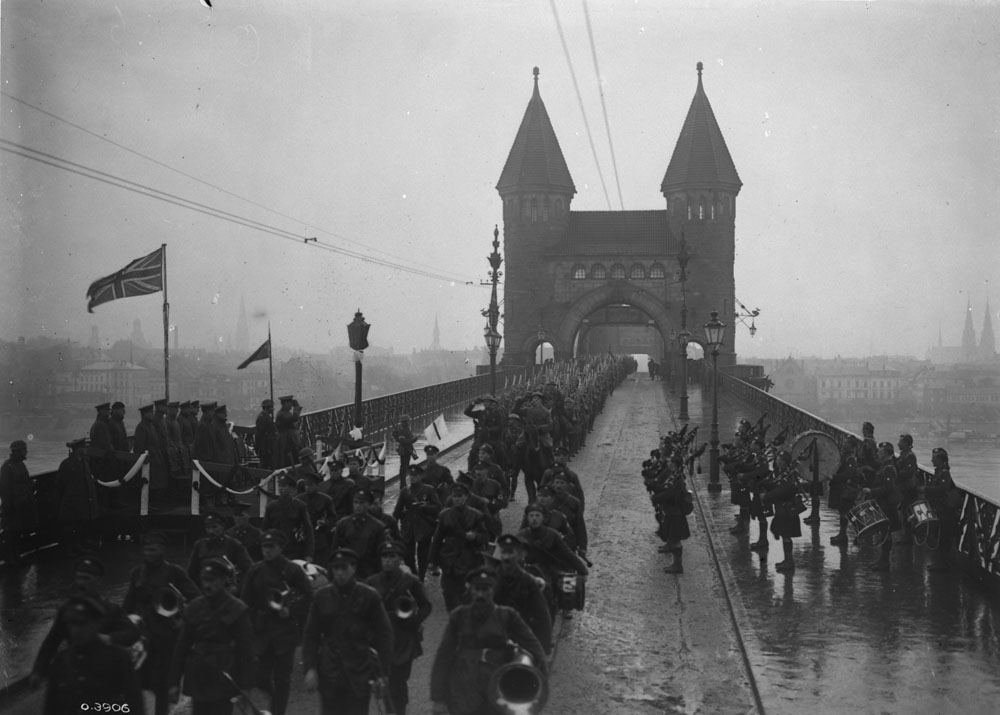
13 December 1918, Rhine River, Germany
It is an age-old axiom that one picture is worth a thousand words. Two
images stand out in the history of the Regiment:
-
On a cold, wet day in December 1918 (see image above), with the Union Jack snapping smartly in the wind, the Commander of the Canadian
Corps, General Arthur Currie took the salute. The victorious Corps
marched between the reviewing stand and the Pipes and Drums of the 19th
Battalion, which played them into Germany. Currie noted: “They looked
to be in the very pink of condition and I did not see one unhappy face
during the day.” -
The 21st of July 1945 day was fair and cool (see image on the page “Band Life”). Once again, Canada celebrated victory, and once again, the Argylls’ Pipes and
Drums were there as one of only three Canadian units picked to represent
Canada in the large, British victory parade before the Allied heads of
state.
Pipe bands symbolize Highland regiments, and during the two great conflicts
of the 20th century, the Argylls’ Pipes and Drums represented not only
the Regiment but also the country itself.
“Above all we heard the pipes. They piped us into Niagara-on-the-Lake in
July ’40 and they led the Allied Victory Parade down Unter den Linden in
’45. My most poignant memory of them was when we were the advance party at
Nanaimo. We … were waiting for the main party. They didn’t come and
they didn’t come. Then, like Jessie’s dream in Lucknow, when she dreamt
she heard the pipes of Colin Campbell’s (those ubiquitous Campbells)
relief force, we heard the faint elfin sound of pipes born to us on some
fragrant Pacific breeze. It faded and all was silent. Then we heard them
again far away but now continuous and soon the glorious music was
passing through the lines. Those sounds we heard and when we think of
them we are back in the Regiment.” – Maj R.A. Paterson, OC, C Company, A&S H of C (1940-46)
And “these sounds” stir the Regimental spirit, now as then. Generations
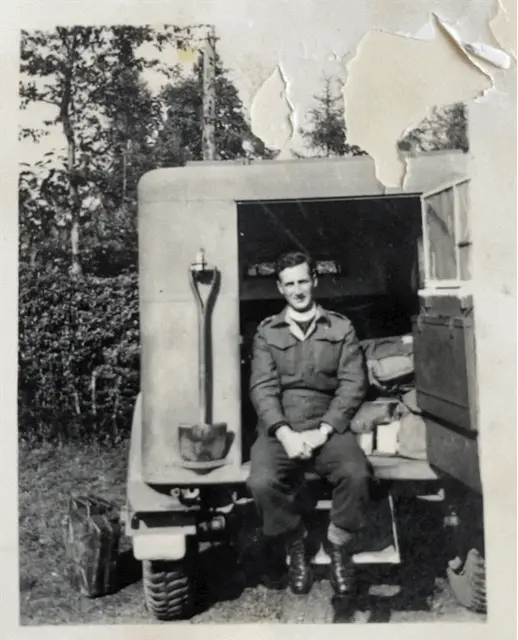
of pipers and drummers, from the legendary Lt Charles Dunbar, DCM (pictured above right), to the present members, have
been attracted to a band in which they are both soldiers and musicians.
The son of a drummer who stood on that Rhine bridge in 1918 marched in
Berlin in 1945.
In the post-war era, the Pipes and Drums have carried on the band’s
traditions and developed an international reputation, having played five times
in the prestigious Edinburgh Military Tattoo – a record for overseas
acts. The band has been the core of the Hamilton International Tattoo since
its inception in 1991. Its ranks have always included composers,
and many tunes have been written and recorded by Argyll pipers and pipe
majors.
Robert L. Fraser
Regimental Historian
2006
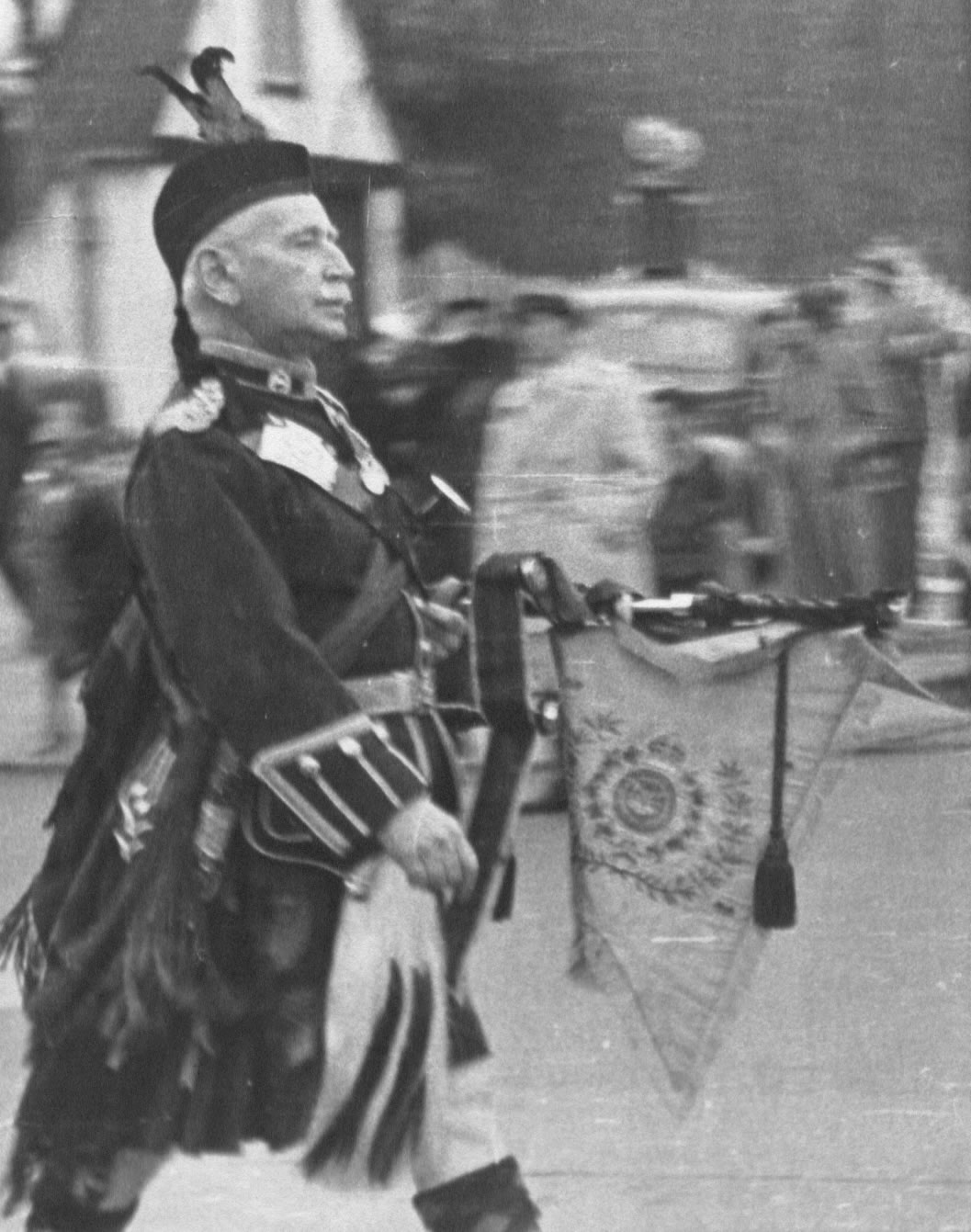
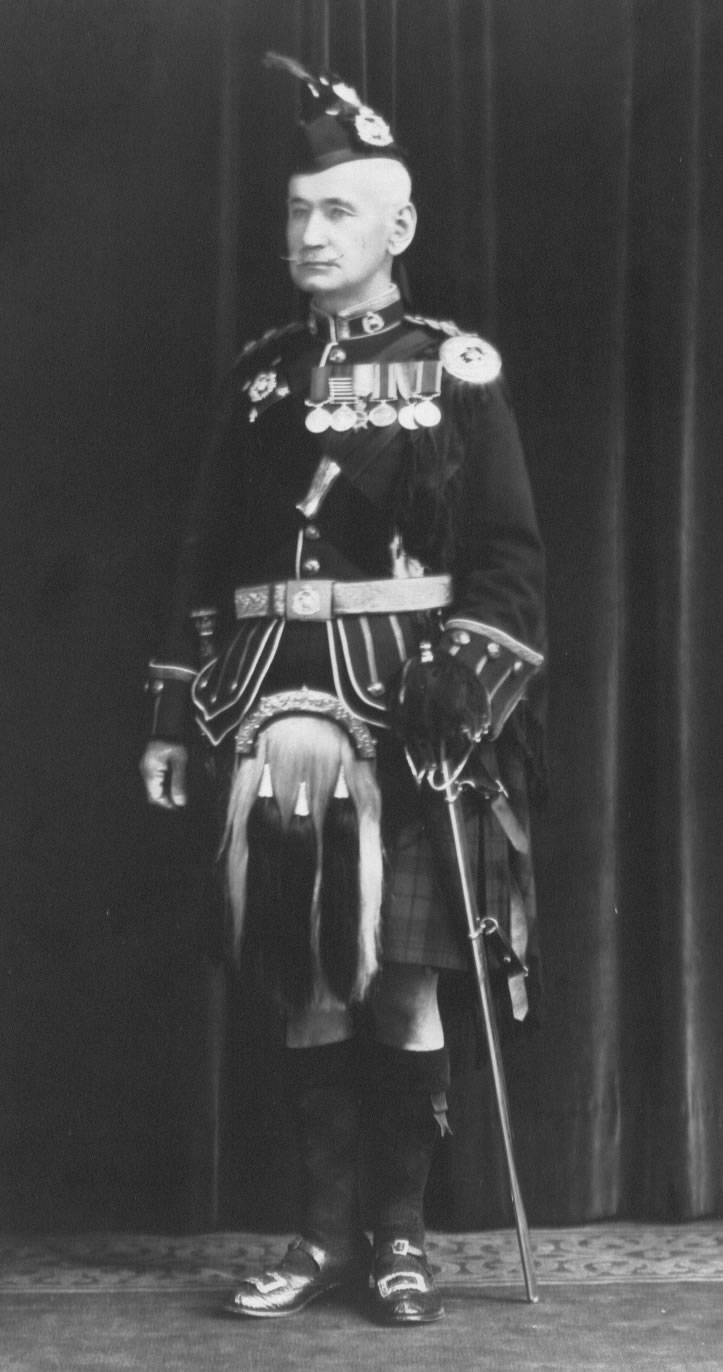
Pipe Major C.D. Dunbar, DCM